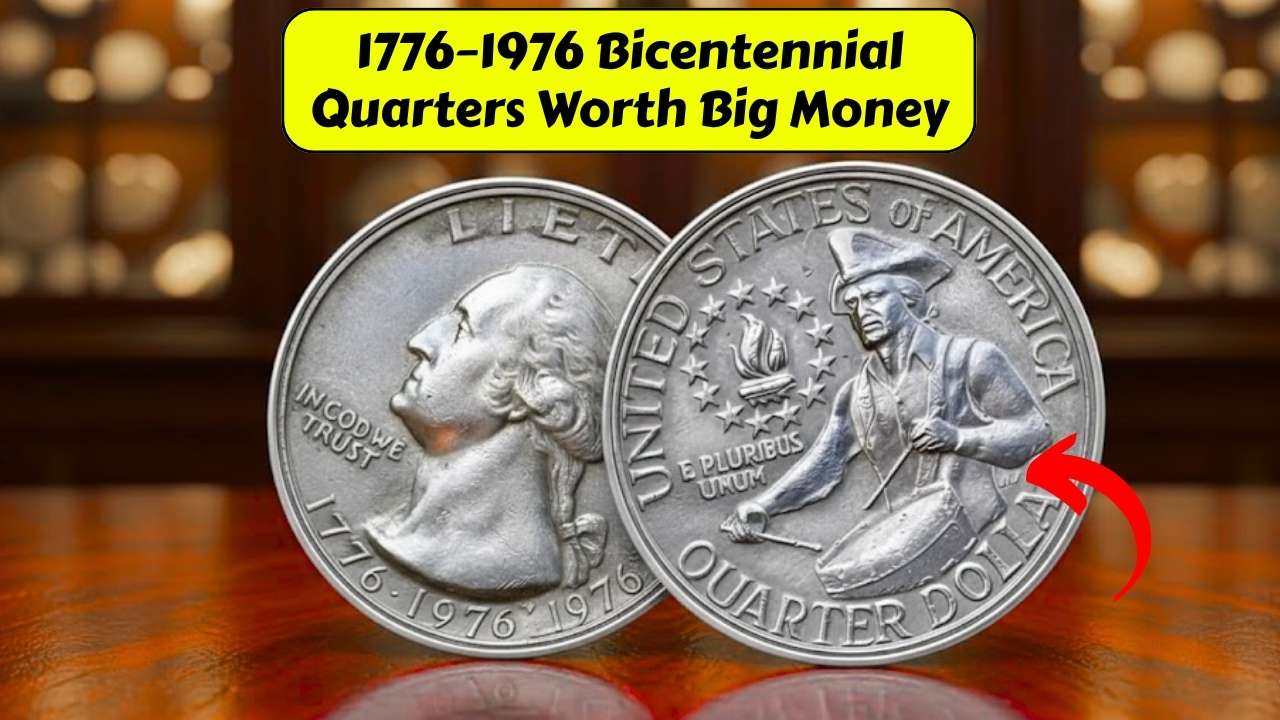
1776–1976 Bicentennial Quarter Value Guide: Coin collecting often brings history to life, and the 1776–1976 quarter dollar is a strong example of this connection. Known as the Bicentennial Quarter, this coin was issued to commemorate 200 years of American independence. Its unique design and historical importance have made it one of the most familiar U.S. coins. Although millions were produced, certain versions are significantly more valuable, making the 1776–1976 Bicentennial Quarter value guide especially useful for collectors at every level.
History of the 1776–1976 Bicentennial Quarter
To celebrate the 200th anniversary of the United States, the U.S. Mint introduced special Bicentennial designs in 1975 and 1976. The quarter retained George Washington’s portrait on the front, but the reverse was completely redesigned. It features a colonial drummer, a torch symbolizing victory, and thirteen stars representing the original colonies. This reverse design was used only for the Bicentennial issue, making these quarters instantly recognizable.
Bicentennial Quarter Design and Composition
The Bicentennial quarter was produced in two primary metal compositions. Most were struck in copper-nickel and released into everyday circulation. In addition, the U.S. Mint created special collector versions containing 40 percent silver. These silver quarters were sold in special mint sets and were never intended for circulation. Because of their silver content and limited production, they usually hold higher value.
Different Types of Bicentennial Quarters
Collectors generally classify Bicentennial quarters into three main types. Circulated copper-nickel quarters are the most common and are still found in pocket change. Copper-nickel proof quarters feature a mirror-like finish and were made specifically for collectors. The most desirable for many collectors are the 40 percent silver uncirculated and proof quarters, which combine precious metal value with limited availability.
Mint Marks and Their Importance
Bicentennial quarters were struck at three U.S. Mint facilities. Philadelphia coins have no mint mark, Denver coins display a D, and San Francisco coins carry an S. The San Francisco Mint produced proof and silver versions, which are often more valuable. While a mint mark alone does not guarantee high value, it plays a key role when combined with condition and composition.
Factors That Influence Bicentennial Quarter Value
Several elements determine the value of a Bicentennial quarter. Condition is one of the most important, as coins with minimal wear are more desirable. Silver content adds intrinsic value, while proof finishes appeal to collectors. Collector demand and market trends also influence prices. Minting errors can greatly increase value, sometimes far beyond the coin’s metal worth.
Rare and Valuable Bicentennial Quarter Variations
Some Bicentennial quarters stand out because of unusual features or minting errors. Double die obverse coins show noticeable doubling in Washington’s portrait or lettering. Off-center strikes and other production mistakes are also highly collectible. Silver proof quarters in excellent condition can command strong premiums, especially when professionally graded.
Understanding Bicentennial Quarter Value Ranges
The value of a 1776–1976 quarter varies widely. Most circulated copper-nickel examples are worth only face value. Uncirculated and proof coins can sell for several dollars, depending on condition. Silver versions generally bring higher prices due to their metal content. Error coins are the most valuable and may sell for hundreds or even thousands of dollars.
Tips for Collecting Bicentennial Quarters
Collectors should start by checking the mint mark and overall condition of each coin. Avoid heavily worn pieces if value is a priority. Silver versions are often a good focus for long-term collecting. Careful inspection for errors is essential, as small details can make a large difference. Using magnification helps identify doubling, misalignment, and other unusual features.
Final Verdict
The 1776–1976 Bicentennial Quarter is more than everyday change; it is a lasting symbol of American history. While most examples are common, certain types, conditions, and errors make some coins genuinely valuable. By understanding this Bicentennial Quarter value guide and knowing what to look for, collectors can better appreciate this historic coin and potentially uncover a valuable discovery.
Disclaimer
This article is intended for informational purposes only. Coin values fluctuate based on market demand, condition, rarity, and authentication. This content does not constitute financial or investment advice. Readers should consult certified coin dealers or professional numismatic experts before buying or selling collectible coins.